











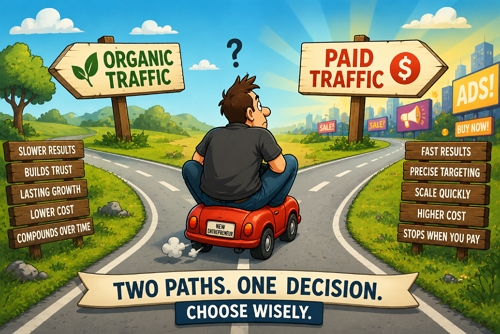
One of the biggest questions new entrepreneurs face is whether they should focus on organic traffic or paid traffic. The truth is that both can be effective, but they serve different purposes and come with different advantages and risks. Understanding how each works can save you time, money, and frustration as you build your business.
Organic traffic refers to visitors who find you naturally through search engines, social media posts, videos, blogs, referrals, or recommendations. You are not directly paying for each visitor. Instead, you are investing your time and effort into creating content, building relationships, and establishing your online presence.
Paid traffic, on the other hand, involves spending money to place your message in front of potential customers. This can include Facebook ads, Google Ads, YouTube ads, solo ads, banner advertising, and many other forms of online promotion. Paid traffic can generate visitors quickly, often within hours of launching a campaign.
The biggest advantage of organic traffic is sustainability. A blog article, YouTube video, social media post, or helpful piece of content can continue generating visitors for months or even years after it is created. While building organic traffic requires patience, the long-term return on investment can be tremendous. Many successful marketers eventually reach a point where their content works for them around the clock.
The downside is that organic traffic usually takes time to develop. New websites often take months before search engines begin sending meaningful traffic. Social media audiences must be built one follower at a time. Many entrepreneurs become discouraged because they expect immediate results and quit before their efforts begin to pay off.
Paid traffic offers almost the opposite experience. Results can come quickly. If you have a compelling offer and a properly targeted audience, you can start generating leads and sales almost immediately. This speed makes paid advertising attractive for marketers who want to scale their business rapidly.
However, paid traffic comes with risks. The most obvious is cost. Every click, lead, or visitor has a price. If your sales process is not working properly, you can spend a significant amount of money with little to show for it. Many beginners make the mistake of buying traffic before they have tested their landing pages, follow-up emails, and offers.
Another danger is becoming completely dependent on paid advertising. If all your traffic comes from ads and your ad account gets suspended, costs increase, or the platform changes its rules, your business can be affected overnight. This is why experienced marketers often recommend building organic assets while using paid traffic strategically.
Regardless of which method you choose, there are several things to watch out for. Avoid any traffic source that promises thousands of visitors for a few dollars. Traffic that does not convert is rarely a bargain. Focus on quality rather than quantity.
Be cautious about chasing every new traffic trend. Platforms and tactics come and go, but providing value and building trust never go out of style. Also remember that traffic alone does not create success. Visitors must be guided through a process that turns interest into action.
The most successful home entrepreneurs often use a combination of both approaches. Organic traffic builds authority, trust, and long-term stability. Paid traffic provides speed, testing opportunities, and scalability. Together, they create a balanced marketing strategy that can withstand changes in the marketplace.
If you are just getting started, focus first on learning how to communicate your message, create valuable content, and build relationships. Once you understand what resonates with your audience, paid traffic can help accelerate your growth. In the long run, the goal is not simply to get more visitors. The goal is to attract the right visitors and provide enough value that they become loyal followers, customers, and advocates for your business.



Leave a Reply
You must be logged in to post a comment.