









There was a time when solo ads were one of my favorite ways to generate leads.
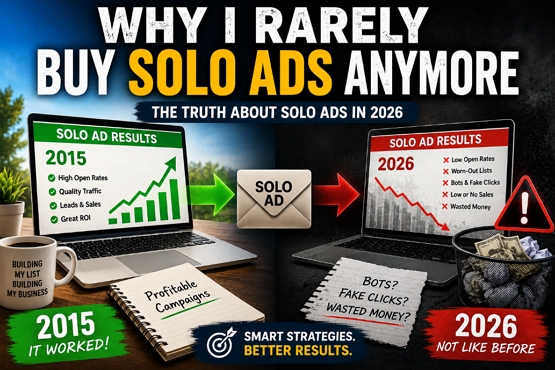
Back around 2015, and for several years afterward, solo ads were producing some very respectable results. You could find a reputable vendor, buy a few hundred clicks, build your email list, make sales, and often recover your advertising investment fairly quickly. Many affiliate marketers and network marketers built large businesses using them.
Today?
Not so much.
While I’m not saying every solo ad seller is dishonest or that every solo ad campaign fails, I can honestly say that I rarely buy solo ads anymore. In fact, if you asked me today where I would invest my marketing budget, solo ads would be much lower on my list than they were a decade ago.
Here’s why.
The Solo Ad Industry Changed
Like many things in online marketing, solo ads became popular because they worked.
Whenever something works, more people jump into the business.
Some built legitimate email lists by providing valuable content and attracting subscribers naturally.
Others…not so much.
Over time, the marketplace became flooded with people selling clicks instead of selling quality traffic.
That shift changed everything.
Today, buying solo ads often feels like buying a lottery ticket. You might hit something good, but your odds are nowhere near what they used to be.
Worn-Out Email Lists
One of the biggest problems is list fatigue.
Think about it.
If someone has been subscribed to hundreds of “make money online” lists over the past five or ten years, how many promotional emails have they seen?
Thousands.
The average subscriber has become immune to hype.
They’ve seen every headline imaginable.
They’ve downloaded hundreds of free reports.
They’ve joined dozens of opportunities.
Many have simply stopped opening emails altogether.
Even if a seller once had an excellent list, repeated promotions eventually reduce responsiveness.
The result?
Lower open rates.
Lower click-through rates.
Lower conversions.
You’re paying today’s prices for yesterday’s performance.
The Same People Are Being Sold Over and Over
Another issue is overlap.
Many solo ad sellers buy traffic from each other.
They rent each other’s lists.
They cross-promote constantly.
That means the same subscriber may receive offers from twenty different vendors every week.
By the time your email arrives, they’ve probably seen something very similar multiple times already.
You’re not reaching a fresh audience.
You’re reaching an audience that’s often exhausted.
Bots Are a Real Problem
Unfortunately, not every click is a real person.
Some vendors use questionable traffic sources.
Others purchase inexpensive traffic simply to fulfill click orders.
Some even use automated systems that generate fake activity.
Now, I’m not accusing every seller of doing this.
There are certainly honest vendors.
But enough questionable practices exist that buyers need to be extremely cautious.
If your statistics show hundreds of clicks but almost no time on site, almost no opt-ins, and visitors bouncing within seconds, something should raise a red flag.
Incentivized Clickers
Another issue that has become increasingly common is paid click traffic.
Some people are literally compensated to click advertisements.
Their goal isn’t to learn about your business.
It isn’t to join your opportunity.
It isn’t to purchase your product.
Their goal is simply to complete a task so they can earn a few cents.
Technically, you received the click you paid for.
Practically?
You didn’t receive a potential customer.
Those are two very different things.
Lead Quality Matters More Than Lead Quantity
One lesson I’ve learned over the years is this:
I’d rather have 50 genuinely interested prospects than 500 people who never wanted to hear from me in the first place.
Too many marketers focus only on growing their email list.
A large list looks impressive.
But if nobody opens your emails…
Nobody clicks…
Nobody buys…
What exactly did you build?
Quality always beats quantity.
The Numbers Don’t Always Add Up
Let’s say you spend $300 on solo ads.
You receive 500 clicks.
Maybe 150 opt in.
Sounds good.
Now ask yourself…
How many actually engage?
How many read your emails?
How many purchase?
How many stay active six months later?
Those are the numbers that actually matter.
Too often, marketers celebrate collecting leads while ignoring whether those leads ever become customers.
So Are Solo Ads Dead?
No.
I don’t believe they’re dead.
I simply believe they’re no longer the dependable traffic source they once were.
There are still reputable vendors.
There are still responsive lists.
There are still successful campaigns.
They’re simply much harder to find.
The margin for error has become much smaller.
If You’re Going to Buy Solo Ads…
If you decide solo ads are worth testing, here are several best practices that can dramatically improve your chances of success.
1. Start Small
Never purchase the seller’s largest package first.
Buy a small test.
If the traffic performs well, scale gradually.
If it doesn’t, you’ve protected your budget.
2. Track Everything
Never send solo traffic directly to an affiliate link.
Use tracking.
Know exactly where your clicks come from.
Monitor:
-
Opt-in rate
-
Time on page
-
Geographic location
-
Device type
-
Bounce rate
-
Conversion rate
Good data prevents expensive mistakes.
3. Build Your Own List
Always send traffic to your own capture page first.
Even if nobody buys today, you now have the opportunity to build a relationship through follow-up emails.
The real asset is your email list—not the vendor’s.
4. Use a Good Lead Magnet
People are much less willing to hand over their email address than they were years ago.
Offer something that solves an actual problem.
Checklists.
Templates.
Short guides.
Tools.
Training.
Give people a real reason to subscribe.
5. Ask Questions Before Buying
A professional seller should be willing to answer reasonable questions.
Ask things like:
-
How was your list built?
-
What’s the average open rate?
-
What niche is your audience?
-
Do you allow tracking?
-
Are clicks unique?
-
Do you filter bots?
-
What countries make up your traffic?
If someone refuses to answer basic questions, I’d move on.
6. Avoid Chasing the Cheapest Clicks
The lowest price rarely provides the best value.
Sometimes paying a little more for a quality list saves a lot of money in the long run.
Cheap clicks that never convert are actually the most expensive clicks you’ll ever buy.
7. Don’t Judge by Opt-Ins Alone
Many marketers stop evaluating after they see a high opt-in rate.
That’s only the beginning.
Watch what happens over the next 30 to 90 days.
Do subscribers open emails?
Do they click?
Do they buy?
Do they stay engaged?
Those answers tell the real story.
My Marketing Focus Today
Today, I spend far more time building assets that continue working long after I’ve created them.
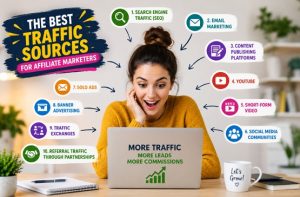
Search engine optimization.
Helpful blog articles.
YouTube videos.
Social media relationships.
Email follow-up.
Community building.
Training.
Referral programs.
These methods usually require more patience than buying traffic.
But they also create something far more valuable.
Trust.
When someone discovers your content through a search engine, watches several of your videos, reads your articles, and follows you on social media before joining your business, they’re arriving because they chose to—not because someone rented you access to their inbox.
Those relationships tend to last much longer.
Final Thoughts
Solo ads aren’t automatically bad.
They’re simply not the reliable marketing strategy they once were.
The marketplace has changed.
Consumer behavior has changed.
Competition has changed.
Unfortunately, the number of questionable traffic sources has grown as well.
If you choose to buy solo ads, do your homework.
Test carefully.
Track everything.
Protect your budget.
And never assume that every click represents a real prospect.
Personally, I’d rather spend my time creating valuable content that attracts people naturally than continually rent someone else’s audience.
It may take longer.
It may require more consistency.
But in my experience, building trust beats buying clicks almost every single time.


Leave a Reply
You must be logged in to post a comment.